The Elsevier Foundation
Catalyzing impact, inspiring change

Foreword
The global research landscape has reached a decisive moment for inclusive research and health. Researchers based in low- and middle-income countries (LMICs) now contribute nearly 60% of global research output, compared to just 13% three decades ago.[1] This remarkable growth reflects sustained investment in people, institutions and research systems, and highlights the opportunity to strengthen research excellence where it can deliver the greatest local and global value.
For more than two decades, the Elsevier Foundation has helped ensure that research informs stronger health systems, more resilient communities and better policy decisions. Our partnerships have advanced training, early-career recognition and practical solutions aligned with the UN Sustainable Development Goals.
As we look ahead, our commitment remains clear: to catalyze inclusive research and health partnerships that strengthen research excellence in under-resourced communities. Together with our partners, we aim to support the people and ideas that enable knowledge to go further, happen faster and benefit communities worldwide.
Our work
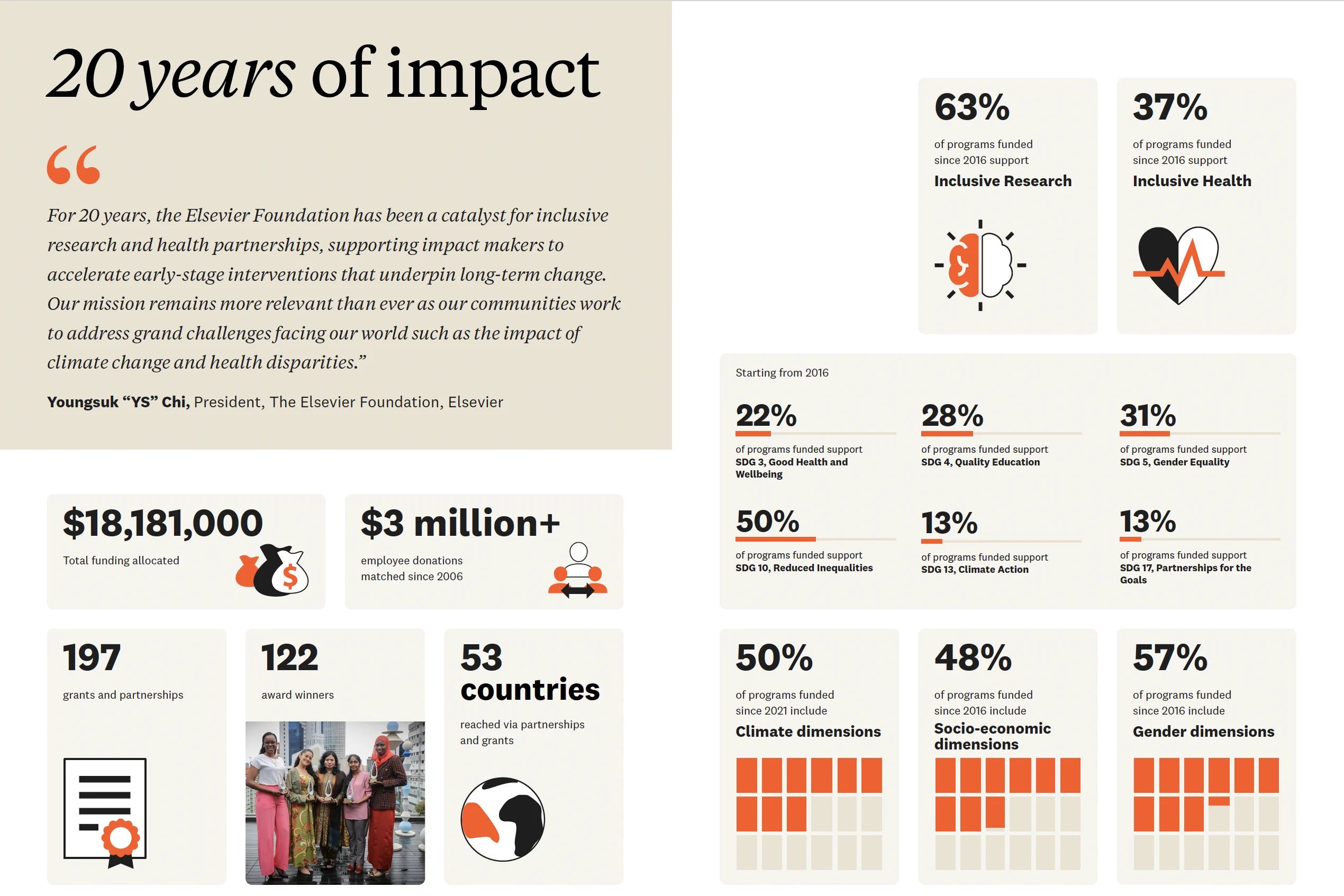
Since its establishment in 2005, the Elsevier Foundation has contributed over $19 million in grants to support over 200 partnerships in more than 70 countries around the world.
Funded by Elsevier, a global leader for advanced information and decision support in science and healthcare, the Elsevier Foundation is a key part of the company’s commitment to advance inclusive research and healthcare, in partnership with the communities that it serves.
The partnerships we support are strongly intersectional and highlight our commitment to supporting underserved communities around the world for better health outcomes and a more sustainable research ecosystem.

Impact story
Strengthening research inclusion in Bhutan and beyond
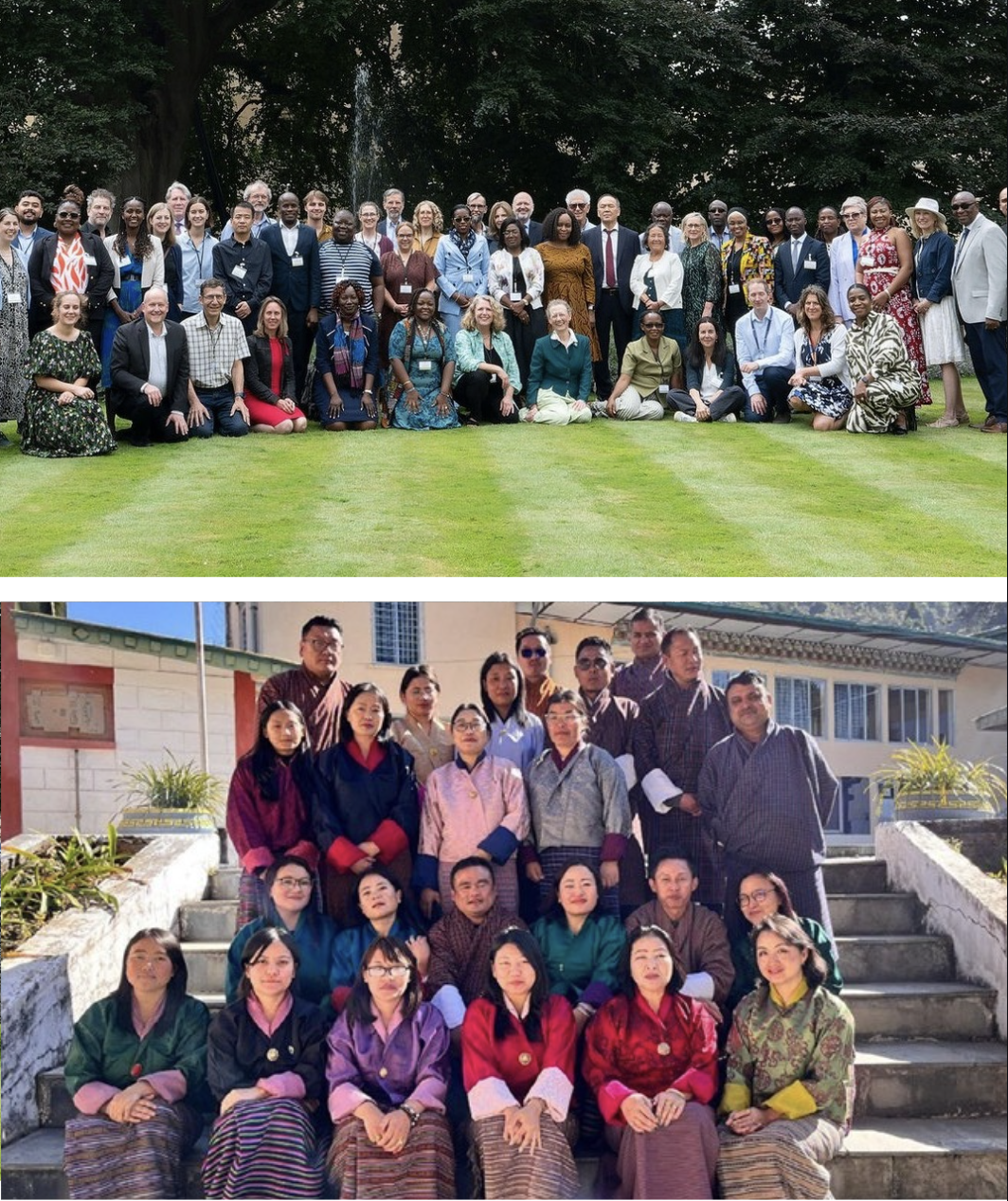
For Sonam Wangdi, Chief Librarian at the Centre for Bhutan and Gross National Happiness Studies, expanding access to research is central to strengthening Bhutan’s growing research community.
In a country where dispersed institutions and limited infrastructure can make collaboration difficult, access to global scientific knowledge is essential for researchers working to address challenges such as biodiversity conservation, climate change and public health.
Through the Research4Life Country Connectors program, Wangdi and other local leaders play a critical role in bridging this gap. By training researchers, strengthening local journals and supporting institutions to engage with global literature, they help move researchers from simply accessing knowledge to contributing to it.
“Access to knowledge and information is a powerful weapon to fight poverty and promote sustainable development for global citizens, particularly for LMICs. ”
As research participation grows across low- and middle-income countries, initiatives such as the Country Connectors program help ensure that researchers have the networks, skills and visibility to contribute to global scientific dialogue.

Commitment to inclusive research programs
Strengthening research participation and supporting emerging researchers is essential for addressing global challenges. Through its long-standing support for Research4Life – a UN-backed partnership providing access to research from more than 200 publishers across 125+ countries – the Foundation helps expand access to trusted knowledge while supporting programs that strengthen local research communities.
Alongside Research4Life, the Foundation collaborates with partners including The World Academy of Sciences (TWAS) and the Organization for Women in Science for the Developing World (OWSD) to support early-career researchers, strengthen editorial and publishing capacity, and promote greater participation of underrepresented scientists.
Looking ahead. The Elsevier Foundation remains committed to advancing inclusive research partnerships that strengthen local leadership, support knowledge exchange across regions, and ensure that researchers everywhere can contribute to the global research community.

Impact story
Advancing healthier aging for women through inclusive science
Across the globe, women’s health continues to face persistent gaps in research and clinical understanding. Conditions such as endometriosis, ovarian cancer and menopause-related disorders remain under-researched and often diagnosed too late, limiting opportunities for prevention and timely care.
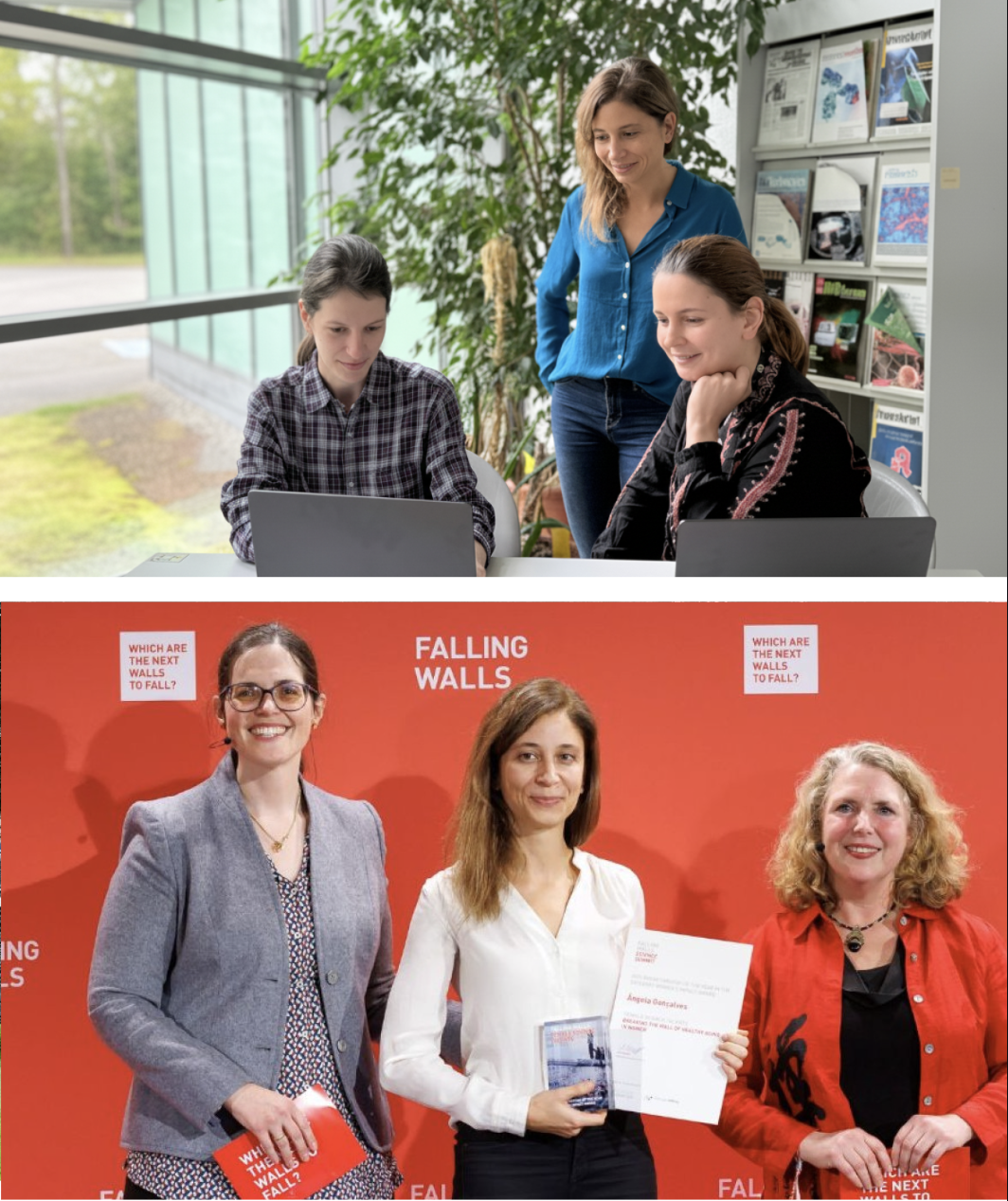
For Dr. Ângela Gonçalves, head of a research group at the German Cancer Research Center (DKFZ), addressing these challenges requires rethinking how women’s health research is generated and applied. Her work received the 2025 Falling Walls Women’s Impact Award and was named Falling Walls’ Science Breakthrough of the Year.
By integrating artificial intelligence, genomics and clinical expertise, Gonçalves’ team is developing non-invasive approaches that enable earlier detection and more personalized care. One key innovation is the use of menstrual fluid as a diagnostic model system, generating biological data that helps clinicians distinguish healthy aging from early disease.
“Our work questions long-held scientific assumptions, from uncovering the hidden costs of the menstrual cycle to reframing menopause as a broader mammalian phenomenon.”
These advances help shift women’s health research from reactive treatment toward preventive and personalized care – laying the groundwork for healthier aging for women worldwide.

Commitment to health innovation programs
Advancing health equity requires not only new scientific discoveries but also stronger representation and leadership for women in science.
Through its partnership with the Organization for Women in Science for the Developing World (OWSD), the Elsevier Foundation recognizes early-career women scientists whose work contributes to solutions aligned with the UN Sustainable Development Goals. In 2025, the OWSD–Elsevier Foundation Awards have celebrated outstanding women researchers from LMICs whose work advances public health, environmental health and maternal and child health.
The Foundation also partners with the Falling Walls Foundation to support the Female Science Talents program, which provides early-career women researchers with leadership training, international visibility and access to global networks.
In addition, the Elsevier Foundation has supported the Gender Summits for more than a decade, creating a global platform to examine how gender bias shapes research systems and health outcomes.
Looking ahead. The Elsevier Foundation remains committed to strengthening inclusive research ecosystems that elevate women’s leadership, accelerate innovation in health research and ensure that scientific progress benefits communities worldwide.

Impact story
Advancing climate action through science, partnership and leadership
In communities already facing the impacts of climate change, practical scientific solutions can make a critical difference.
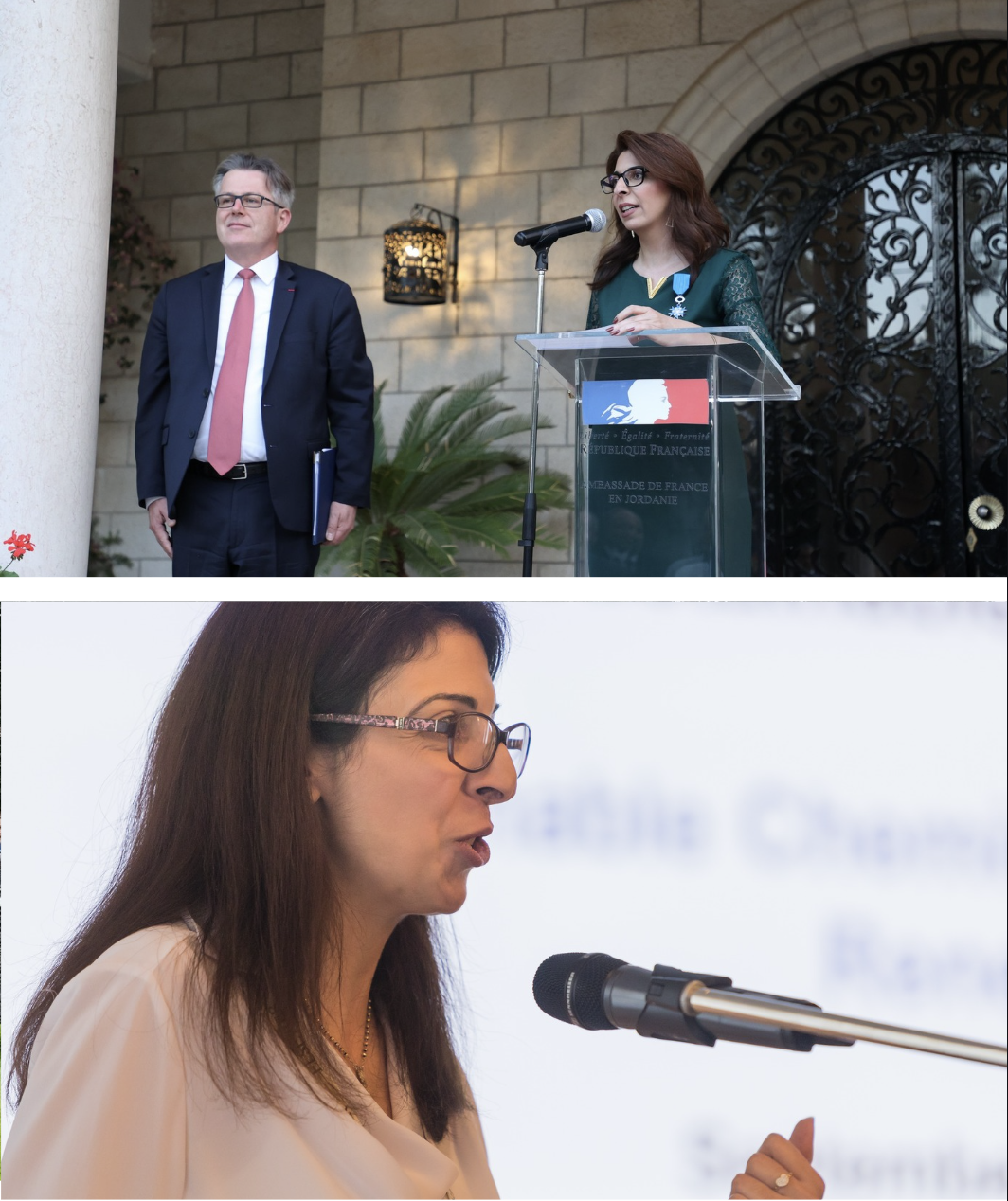
In 2019, Dr. Ramia Al Bakain, then an Associate Professor at the University of Jordan, received the €50,000 first prize in the Elsevier Foundation Chemistry Challenge for developing a novel method to remove toxic metals from wastewater. Her work addressed a growing challenge in Jordan: chronic water scarcity. Using parsley, a commonly available herb, Dr. Al Bakain developed a low-cost membrane technology capable of treating hazardous medical and industrial wastewater so it can be safely reused in agriculture.
The approach demonstrates how green chemistry can strengthen food security, protect public health and build resilience in water-stressed communities.
Since receiving the award, Dr. Al Bakain’s work has continued to grow in both scope and influence. Now a full Professor of Analytical and Environmental Chemistry at the University of Jordan, she leads interdisciplinary research on water–food–agriculture security across the Mediterranean, Middle East and North Africa regions.
Her continued engagement with the Challenge reflects the importance of long-term support for scientists developing climate solutions. In 2026, she will serve as a jury member for the Chemistry for Climate Action Challenge, helping identify and support the next generation of climate innovators.

Commitment to climate action programs
Addressing climate change requires innovative scientific solutions and strong global collaboration. Through the Chemistry for Climate Action Challenge, the Elsevier Foundation supports chemistry-based approaches to climate mitigation, water purification, sustainable materials, waste reduction and more – particularly in LMICs.
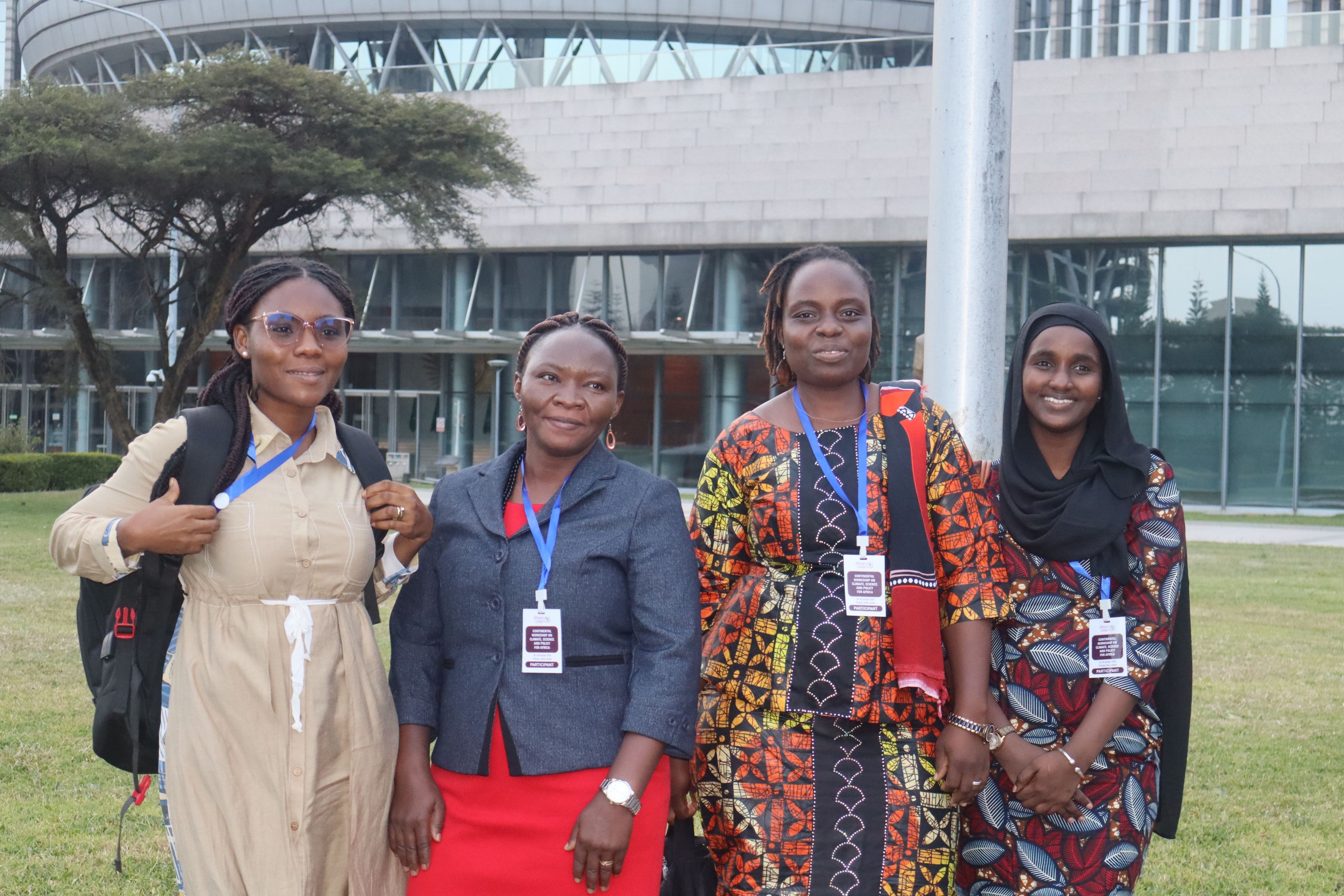
The Foundation has also partnered with The World Academy of Sciences (TWAS) on the Climate Women initiative, supporting projects led by women scientists across the Global South that address locally defined climate challenges. In 2025, TWAS, UNESCO, the African Union and the Elsevier Foundation convened women climate researchers in Addis Ababa to strengthen collaboration, scientific leadership and evidence-based approaches in climate-vulnerable regions.
Looking ahead. As climate risks intensify, the Elsevier Foundation remains committed to supporting scientists whose work advances practical, locally relevant climate solutions and strengthens resilience for communities worldwide.

Alumni: Catalysts for impact
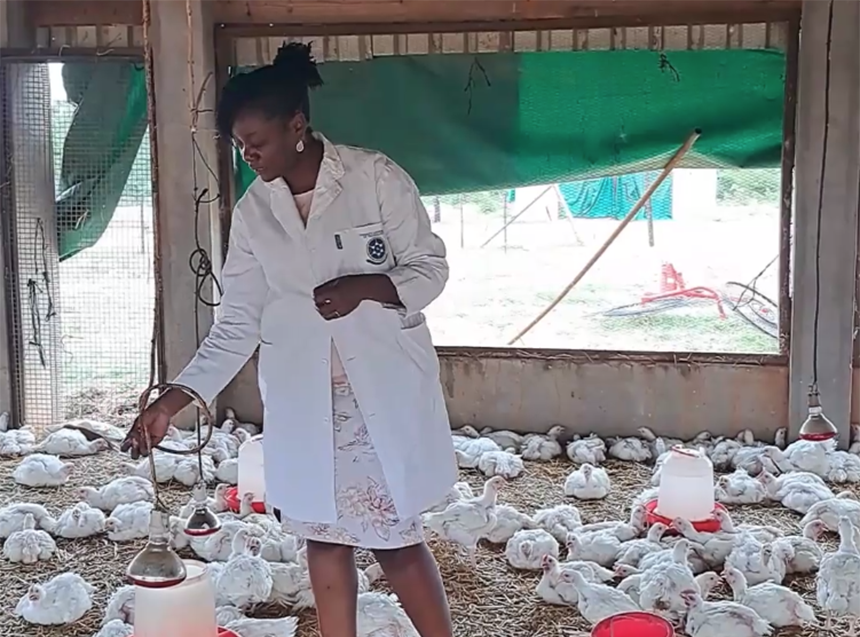
For more than two decades, the Elsevier Foundation has supported researchers and practitioners working to address global challenges. Many of these awardees remain closely connected to the Foundation, forming a growing alumni community that shares knowledge, mentors others and contributes to research, policy and public dialogue.
Today, the network includes 120+ alumni across more than 50 countries. Many first engaged with the Foundation early in their careers and now lead research groups, advise governments and shape policy. Among them are Dr. Heyddy Calderón, now Minister of Environment in Nicaragua, and Dr. Gabriela Montenegro-Bethancourt, Secretary of Science and Technology in Guatemala.
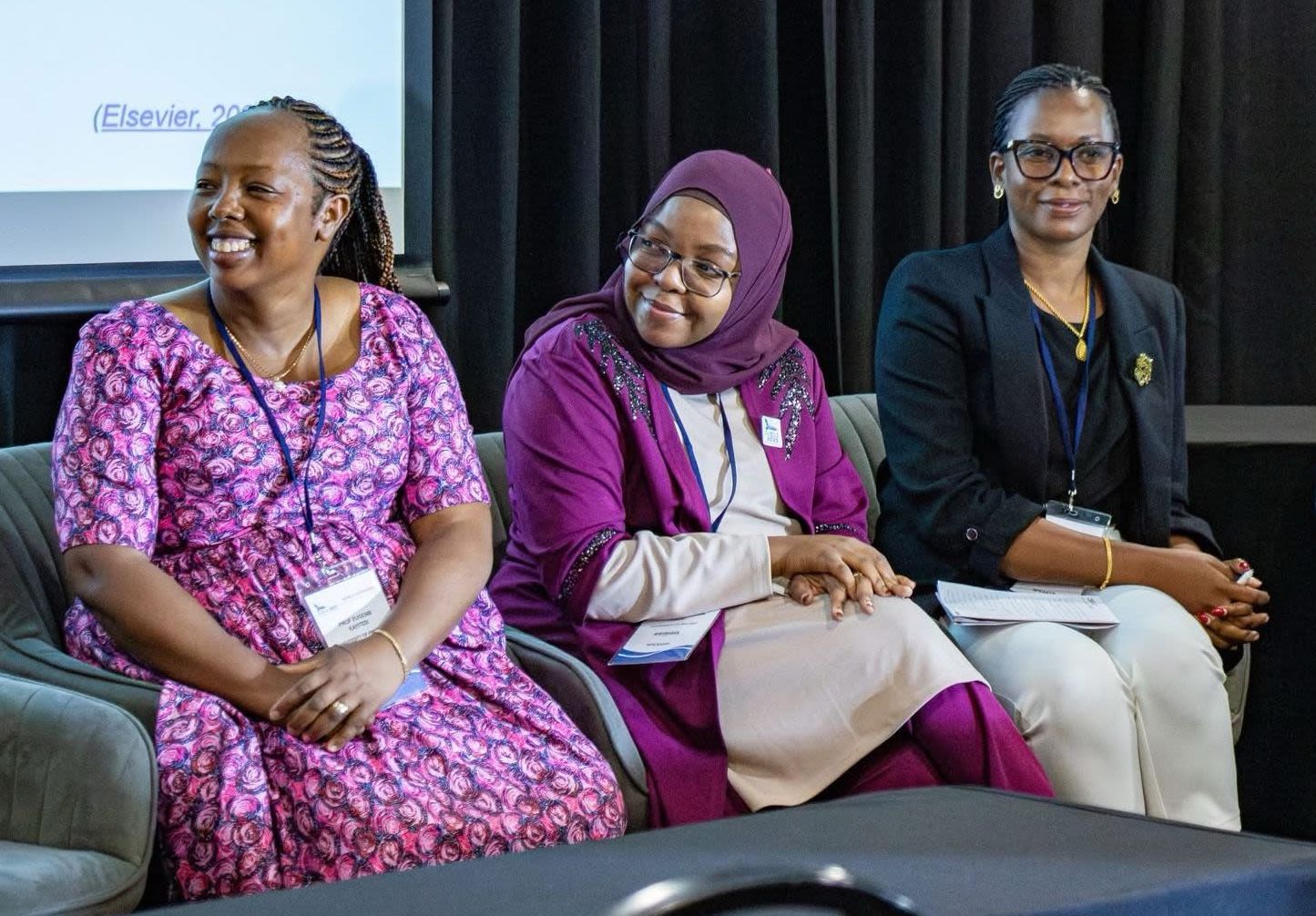
Alumni also contribute to global conversations on science, health and climate. In 2025, OWSD–Elsevier Foundation award winners joined panels at the World Conference of Science Journalists and the Africa Health Agenda International Conference, bringing research evidence into discussions on public health, leadership and media engagement.
Together, this global community continues to extend the impact of the Foundation’s partnerships – helping research inform decisions, strengthen systems and benefit communities worldwide.