What if sawdust could help forests go further?
What we call waste might be the foundation of something new.
What we call waste might be the foundation of something new.
In Sri Lanka, sawdust from timber workshops is usually discarded or burned.
Two research teams are testing a simple proposition: use more of what already exists, and waste can become building material, cleaner fuel, income, and time returned to people whose days are already stretched.
In Sri Lanka, Prof. Thilini D. Gunasekara and Dr. Amila K. Jeewandara are turning sawdust into durable wood-like panels. Their aim is to extract more value from every tree already harvested, using a process simple enough for small manufacturers. At Dzaleka Refugee Camp in Malawi, organic waste is piling up while communities struggle for fuel, income and menstrual products.
In Malawi, Milemo Lusambya and the community organisation MAGUFINA want to convert organic waste into fuel briquettes, biochar and biodegradable sanitary pads, with women’s cooperatives owning and running the facilities.
The projects tackle different challenges, but their instinct is the same. What we call waste might be the foundation of something new.
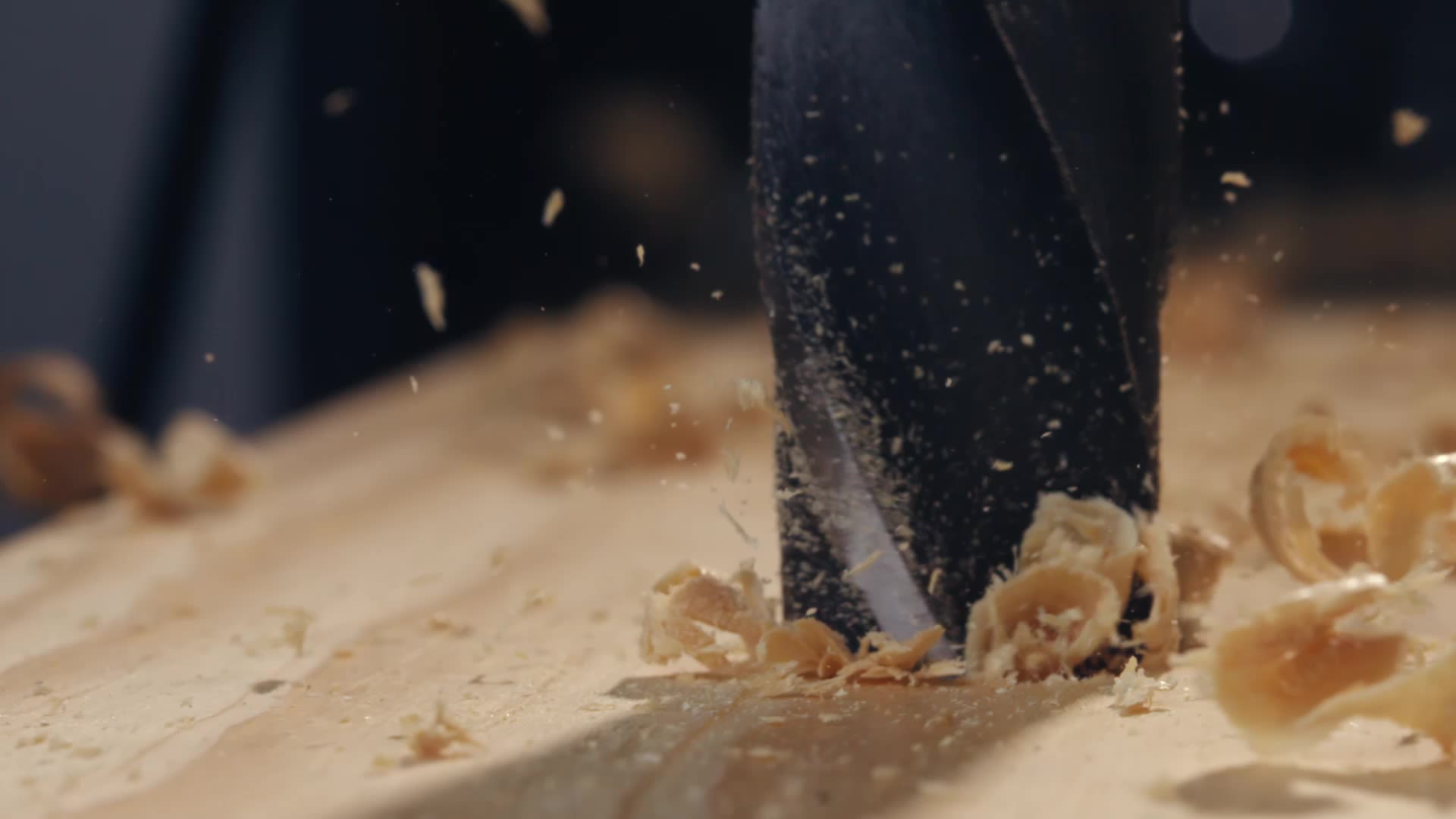
In Sri Lanka, sawdust from timber workshops is usually discarded or burned.
Two research teams are testing a simple proposition: use more of what already exists, and waste can become building material, cleaner fuel, income, and time returned to people whose days are already stretched.
In Sri Lanka, Prof. Thilini D. Gunasekara and Dr. Amila K. Jeewandara are turning sawdust into durable wood-like panels. Their aim is to extract more value from every tree already harvested, using a process simple enough for small manufacturers. At Dzaleka Refugee Camp in Malawi, organic waste is piling up while communities struggle for fuel, income and menstrual products.
In Malawi, Milemo Lusambya and the community organisation MAGUFINA want to convert organic waste into fuel briquettes, biochar and biodegradable sanitary pads, with women’s cooperatives owning and running the facilities.
The projects tackle different challenges, but their instinct is the same. What we call waste might be the foundation of something new.
The “rebirth of sawdust”
For Prof. Thilini D. Gunasekara, a polymer scientist at the University of Sri Jayewardenepura, the idea began with sawdust, which she saw as a resource masquerading as a waste product. With Dr. Amila K. Jeewandara of the University of Kelaniya, she set out to make sawdust useful again.
“People call it waste,” Thilini said. “Our thinking was: can’t we use that material?”
The team bound sawdust with natural rubber latex. The resulting sheets matched or exceeded international requirements for strength, flexibility and moisture resistance. More than 90% of the composite is sustainable, with no toxic resins. The team has also tested its biodegradation and cytotoxicity.
Thilini calls it “the rebirth of sawdust”: a way to extract more value from every tree already harvested.
Creating the material was one challenge. Making it simple enough to produce was the next.
For Prof. Thilini D. Gunasekara, a polymer scientist at the University of Sri Jayewardenepura, the idea began with sawdust, which she saw as a resource masquerading as a waste product. With Dr. Amila K. Jeewandara of the University of Kelaniya, she set out to make sawdust useful again.
“People call it waste,” Thilini said. “Our thinking was: can’t we use that material?”
The team bound sawdust with natural rubber latex. The resulting sheets matched or exceeded international requirements for strength, flexibility and moisture resistance. More than 90% of the composite is sustainable, with no toxic resins. The team has also tested its biodegradation and cytotoxicity.
Thilini calls it “the rebirth of sawdust”: a way to extract more value from every tree already harvested.
Creating the material was one challenge. Making it simple enough to produce was the next.
Simple enough to leave the lab
Sri Lanka’s recent economic crisis changed the way Thilini thought about the country’s own raw materials.
“We shouldn’t throw anything away as waste,” she said. A little green chemistry, she argued, could rebuild something useful from it.
That principle shaped a process requiring no advanced machinery.
“It’s not rocket science,” she said. “It’s a very simple technique.”
The simplicity could put production within reach of small manufacturers. The Elsevier Foundation’s Chemistry for Climate Action Challenge is supporting a pilot plant at Thilini’s university with $25,000.
A second project receiving support begins with a different waste stream in Malawi.
In Malawi, one waste stream could meet three needs
At Dzaleka, Milemo Lusambya is applying the same instinct to organic waste. He leads Let’s Be Transformed, the community organization known as MAGUFINA.
Dzaleka Refugee Camp camp was built for 10,000 people and now hosts more than 56,000. Lusambya saw three interconnected challenges:
89% of households rely on charcoal or firewood
Women spend 4.8 hours a day collecting fuel
68% lack access to menstrual products
89% of households rely on charcoal or firewood.
Women spend 4.8 hours a day collecting fuel
68% lack access to menstrual products
MAGUFINA plans to turn 1,000 kilograms of organic waste each month into fuel briquettes, biochar and biodegradable sanitary pads, using no synthetic chemicals and 60% less energy than industrial methods. Women’s cooperatives would run the facilities and retain 70% of revenues.
Elsevier Foundation funding will help build the first facility and train its first cohort of women.
“This prize is not just $25,000,” Lusambya said. “It is 40 jobs for women who currently earn nothing.”
Funding can start a pilot. Turning it into a lasting system depends on the network around it.
“This prize is not just $25,000. It is 40 jobs for women who currently earn nothing.”
Milemo Lusamby
MAGUFINA
MAGUFINA plans to turn 1,000 kilograms of organic waste each month into fuel briquettes, biochar and biodegradable sanitary pads, using no synthetic chemicals and 60% less energy than industrial methods. Women’s cooperatives would run the facilities and retain 70% of revenues.
Elsevier Foundation funding will help build the first facility and train its first cohort of women.
“This prize is not just $25,000,” Lusambya said. “It is 40 jobs for women who currently earn nothing.”
Funding can start a pilot. Turning it into a lasting system depends on the network around it.
“This prize is not just $25,000. It is 40 jobs for women who currently earn nothing.”
Milemo Lusamby
MAGUFINA
Local ideas need global networks
“Research is not just a single thing,” Thilini said. “It’s a collaborative event.”
Commercial production will require expertise beyond polymer science and technology: engineers, entrepreneurs and manufacturers. Yet Sri Lanka has limited specialist instruments, testing facilities and research funding.
“If we can find a very good collaborator who can take this material to the next level, that would be wonderful,” she said.
The Challenge is one place those connections can begin. Run by the Elsevier Foundation with Elsevier’s sustainable chemistry journals team, it brings finalists before a scientific jury at the Green & Sustainable Chemistry Conference, creating visibility and opportunities for international collaboration.
The teams do the research and the Chemistry for Climate Action Challenge gives early-stage ideas a forum for scrutiny and connection.
Those connections also depend on a clear view of the evidence.
The evidence trail matters as much as speed
Thilini already uses generative AI to refine her writing and get oriented in long research papers.
“Sometimes you have a long paper, and you just want to summarise it,” she said. “You can get a good understanding from the information.”
But for research, speed is only useful if the evidence can be trusted.
When asked what would make AI more valuable in her work, Thilini pointed to two things: the ability to trace information back to peer-reviewed sources and to identify researchers working on similar problems. Both matter when an early-stage idea needs testing, specialist facilities and new expertise.
“If we can find a good international collaborator who can take this material to the next level, that would be wonderful,” she said.
Thilini already uses generative AI to refine her writing and get oriented in long research papers.
“Sometimes you have a long paper, and you just want to summarise it,” she said. “You can get a good understanding from the information.”
But for research, speed is only useful if the evidence can be trusted.
When asked what would make AI more valuable in her work, Thilini pointed to two things: the ability to trace information back to peer-reviewed sources and to identify researchers working on similar problems. Both matter when an early-stage idea needs testing, specialist facilities and new expertise.
“If we can find a good international collaborator who can take this material to the next level, that would be wonderful,” she said.
That is the thinking behind LeapSpace, Elsevier’s research-grade AI workspace. Built on trusted scholarly literature, it helps researchers explore the evidence, understand where ideas come from and discover experts working in related fields, while keeping them in control of interpreting and validating the science.
The Challenge winners now have access to LeapSpace as they take their projects forward.
For Thilini, that means a new way to navigate the literature, trace ideas back to their sources and identify researchers who could bring the expertise, equipment or perspective needed to move the work beyond the laboratory.
The next resource may already be nearby
The next resource may already be nearby
Both projects are now at that point. Their pilot facilities must show that the chemistry, economics and community models can work together beyond the laboratory.
“Innovation arrives when there is a problem to be solved,” Thilini said. “If we really look into the environment, there are 1,001 problems we, the chemists or the scientists, can solve—and some problem solutions are very simple.”
The next climate resource may be sitting on a workshop floor or moving through a community waste stream, waiting to be used more fully.